
Temperatures remained above 45 degrees Celsius in large parts of Rajasthan, Haryana, Delhi, Chandigarh and Uttar Pradesh, affecting daily life as many chose to remain indoors in the afternoon.

The maximum temperature at the Safdarjung Observatory, Delhi's base station, rose to 42.5 degrees Celsius.

This is the first cyclone in the Bay of Bengal this pre-monsoon season.

The weather department also said the national capital recorded only two rainy days this May, the lowest in 10 years.

The weather department on Wednesday issued a rain 'red alert' warning for Mumbai and adjoining areas and asked the authorities to be prepared to handle any situation.

Jalore, Sirohi, Pali and Barmer districts are the most affected and facing flood-like situations, the official said.

Temperatures in 17 locations breached 48 degrees Celsius on Monday, with the relentless heat affecting health and livelihoods across large parts of northwestern and central India.

The mercury at the Safdarjung Observatory is expected to breach the 43-degree mark on Thursday and touch 44 degrees Celsius by Friday, according to the India meteorological department.

Delhi's minimum temperature on Wednesday morning plunged to 4.4 degrees Celsius -- the season's lowest -- making the national capital colder than Dharamsala, Nainital and Dehradun.

The body of a junior commissioned officer was retrieved from a stream in the Poshana area of Surankote late Saturday evening, while the body of a second soldier was found this morning as the water level started receding in the district.

The fine particulate matter PM2.5 touched 304 micrograms per cubic metre on Saturday, which is regarded very unhealthy specially for people with heart and lung problems.

Heavy rains lashed Mumbai and its suburbs on Wednesday, causing flooding on roads and rail tracks and disrupting suburban train services as the south-west monsoon arrived in the city.

According to an IMD forecast issued on Thursday, a heatwave spell will persist over northwest and central India during the next five days and over east India during the next three days.

The BMC declared a holiday for all government and private schools and colleges in Mumbai on Thursday after the IMD issued a 'red' alert for the metropolis.

Heavy rains pounded south and central Kerala on Saturday wreaking havoc in many parts with some people feared missing in the landslides that occurred in hilly areas bordering Kottayam and Idukki districts prompting the state government to seek the assistance of the Army and Air Force for rescue operations.

Lakhs of voters will have to bear the searing heat when they step out to exercise their franchise in the second phase of the Lok Sabha elections on Friday.

'Already, the temperature has touched 39 degrees in some parts of Gujarat and now we are in the last week of February.' 'We need to activate the heat action plan from March 1.'

Assam's flood situation remained critical on Tuesday with over 6.71 lakh people affected in 20 districts in the second wave of flooding this year, as the Indian Air Force (IAF) rescued 13 stranded fishermen from the severely-hit Dibrugarh district, an official said.

The Met office has issued a "red" warning for Delhi, Haryana, Punjab and west Rajasthan, stressing the need for "extreme care for vulnerable people".
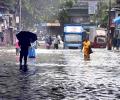
Some low-lying places like Hindmata, and areas in Dadar and Sion, including the Gandhi Market and road number 24 in Sion, were inundated, forcing pedestrians to wade through the water and making it difficult for motorists to commute.

Around 1,100 passengers have been evacuated. Around 14,00 are still stuck.

The mercury breached the 46-degree Celsius mark in several places such as Allahabad (46.8 degrees Celsius) and Jhansi (46.2 degrees Celsius) in Uttar Pradesh; Sports Complex (46.4 degrees Celsius) in Delhi; Ganganagar (46.4 degrees Celsius) in Rajasthan; Nowgong (46.2 degrees Celsius) in Madhya Pradesh; and Maharashtra's Chandrapur (46.4 degrees Celsius).

The depression in the Arabian Sea is likely to intensify into a 'very severe cyclonic storm' on May 17 and cross the Gujarat coast a day later, the India Meteorological Department (IMD) said.

In Uttar Pradesh, the death toll due to lightning strikes rose to 42.
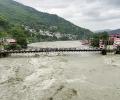
Incessant rains unleashed more death and destruction on Monday in parts of north India, with 37 people killed in landslides and other rain-related incidents in the last two days even as the Army and NDRF teams stepped in to intensify the relief and rescue operations.

Palghar, Thane, Raigad and Ratnagiri could witness thunderstorm activity, lightning, moderate rain and gusty storm over the next two days.

Intense spells of rain are likely to continue in the districts of Thane, Raigad and Mumbai during next four hours, the India Meteorological Department (IMD) said.

Climate experts also warn the intensity of rains in Kerala and Uttarakhand is "alarming" and must draw immediate attention towards "climate emergency".

With the fresh fatalities, the total number of people losing their lives in this year's flood and landslides across the state has gone up to 42.

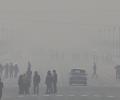
A blinding layer of dense fog over north India, including Delhi, caused major inconvenience to commuters. The visibility levels were 50 metres around 5:30 am.

Images from across Europe and parts of Asia show hot and bothered people dunking their feet in buckets of ice and wading into the sea as sweltering temperatures put some areas on red alert.

Chief Minister Sukhvinder Singh Sukhu said efforts are on to rescue the 300 stranded people, and they could be airlifted as the weather clears. Power and water supply has been snapped in several areas.

Gale-force winds, heavy rainfall and high tidal waves swept the coastal belts of Maharashtra and Goa as Cyclone Tauktae hurtled northwards towards Gujarat.

The experts said that climate change is not only raising temperatures and making India's heatwaves hotter, but also changing weather patterns that further drive dangerous weather extremes.

Delhi's primary weather station, the Safdarjung Observatory, registered a maximum temperature of 40.4 degrees Celsius, four notches higher than normal.

The India Meteorological Department has issued an 'orange' alert.
The minimum temperatures are very likely to fall by 2-5 degrees Celsius over most parts of East India, Central India over the next two-three days, while the spell of intense cold can extend beyond that in the Northwest part of the country.

The maximum temperature at the Safdarjung Observatory, Delhi's base station, is likely to rise to 45 degrees Celsius.

Intense monsoon rains brought normal life to a standstill in several parts of eastern and central Rajasthan, flooding out roads, rail tracks, low-lying residential areas and hospitals and claiming seven lives since Sunday night.

'It is important to understand that the disability is not in the person.' 'The problem lies in societal attitude and the discriminatory treatment given to disabled people in our country.'
